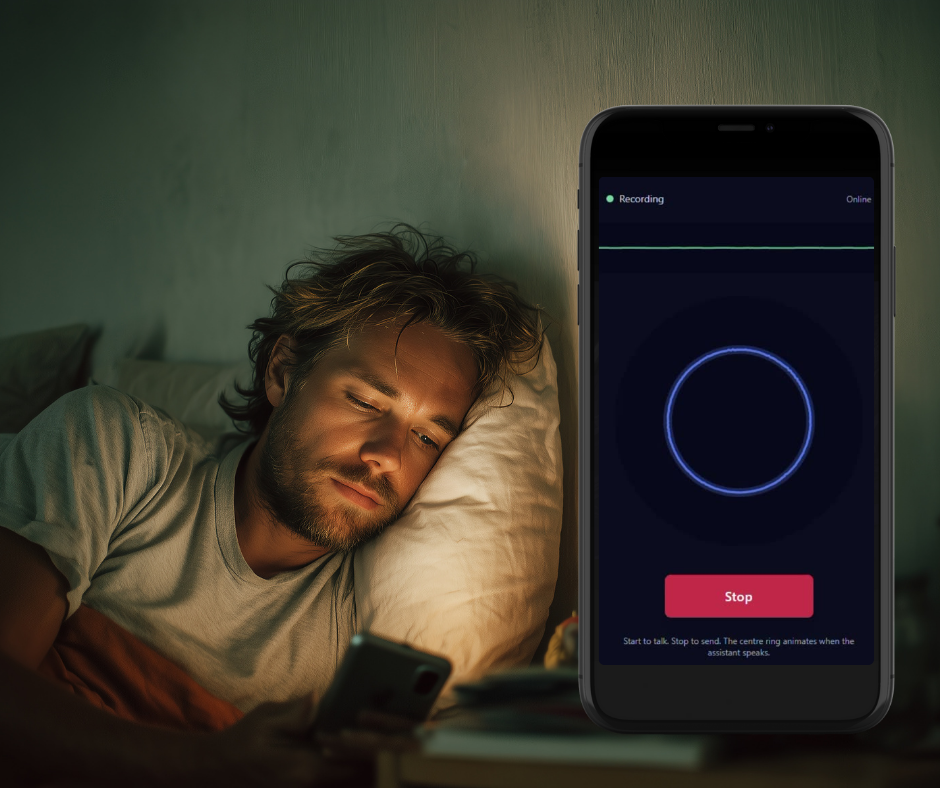
RAG AI in Healthcare: Searching Medical Knowledge with Vector Databases
How Retrieval-Augmented Generation (RAG) allows AI to safely search medical publications, journals, and clinical guidelines using vector databases.
Caredevo Blog
Structured clinical guides for Australian GPs — evidence-based, workflow-ready.

How Retrieval-Augmented Generation (RAG) allows AI to safely search medical publications, journals, and clinical guidelines using vector databases.

An AI scribe captures one consultation. A patient intelligence system understands the full patient. This is the next step in clinical AI for Australian GPs — twelve specialised agents working across your patient database before, during, and after every consultation.

Discover how a digital care partner helps Australian GPs generate structured GPCCMPs, MHCPs, and chronic disease plans without staying back after clinic.

A real-world GP perspective on AI scribes: when they save time, when they don’t, privacy concerns, Medicare structure, and how to use them safely in complex chronic disease and mental health consults.

Learn how AI scribes help Australian GPs turn complex multi-problem consultations into structured care plans, MHCP, and health assessments — without extra typing after clinic.

A practical guide for Australian GPs on how AI scribes work, compliance requirements, and how they reduce burnout while improving documentation quality.

AI medical scribes automate consultation notes, but newer AI platforms focus on chronic disease management and structured care planning. Learn how these systems compare.

A comprehensive Australian GP guide to AI medical documentation—what it is, why it matters, how to implement it safely, and which tools to consider.

An Australian GP’s comprehensive guide to PTSD: recognition, screening, MHCP workflows, evidence-based therapies, safety, and AI-enabled documentation.

Many patients labelled with depression are actually struggling with trauma, neurological conditions, chronic illness, or social hardship. A GP explains why mental health care requires looking beyond a single diagnosis.

A GP explains how to access 10 Medicare psychology sessions through a Mental Health Care Plan (MHCP), including how tools like the Depression Anxiety Stress Scale 21 (DASS 21 PDF) are used.

GP consults are often consumed by history-taking, yet key details are still missed. What if patients could share their full story safely at home before the appointment?

A practical guide for Australian GPs on structuring mental health consultations into compliant MHCPs using AI — covering risk assessment, Better Access, and documentation without the after-hours burden.

Is It Legal for Employers to Ask About Mental Health? Learn how Australian GPs can respond to employer requests, protect patient rights, and streamline documentation.

AI scribes and AI agents are changing how GPs create Mental Health Care Plans by capturing history, organising notes, and tracking psychometric tools like K10 and PCL-5 over time.

A practical guide for Australian GPs on recognising, assessing, and managing depression in general practice, including screening tools, treatment options, and care planning.

A practical, GP-focused guide to autism recognition, assessment pathways, and team-based management in Australian general practice.

A practical GP guide to recognising ADHD in children and adults in Australian general practice, including diagnosis pathways, assessment tools, and treatment options.

A practical 5-step framework for GPs to review persistent depression — beyond just prescribing SSRIs.

A structured 5-step framework for Australian GPs to manage complex mental health patients — covering full history, clear problem definition, SMART goal setting, task planning, and MHCP documentation.

A practical guide for Australian GPs on how MBS Item 965 and 967 are not just billing items, but powerful entry points into structured chronic care, enabling spirometry, ECG, allied health referrals, and proactive disease management.

A practical reflection for Australian GPs on shifting from item-number thinking to system-building care. Learn how consultations can unlock preventive services, chronic disease systems, allied health integration and long-term patient relationships.

A practical guide for Australian GPs on using MBS Item 699 Heart Health Checks to detect cardiovascular risk early, activate preventive systems, and integrate lifestyle and chronic disease care.

A practical guide for Australian GPs on how MBS Item 2715 mental health consultations often uncover lifestyle risks, social determinants, and chronic disease instability that may lead to structured chronic care planning such as Item 965 or 967.

A practical guide for Australian GPs on how Health Assessment items (703, 705, 707, 715) can uncover chronic disease risk and ethically integrate with structured chronic care reviews (965/967) and allied health referrals.

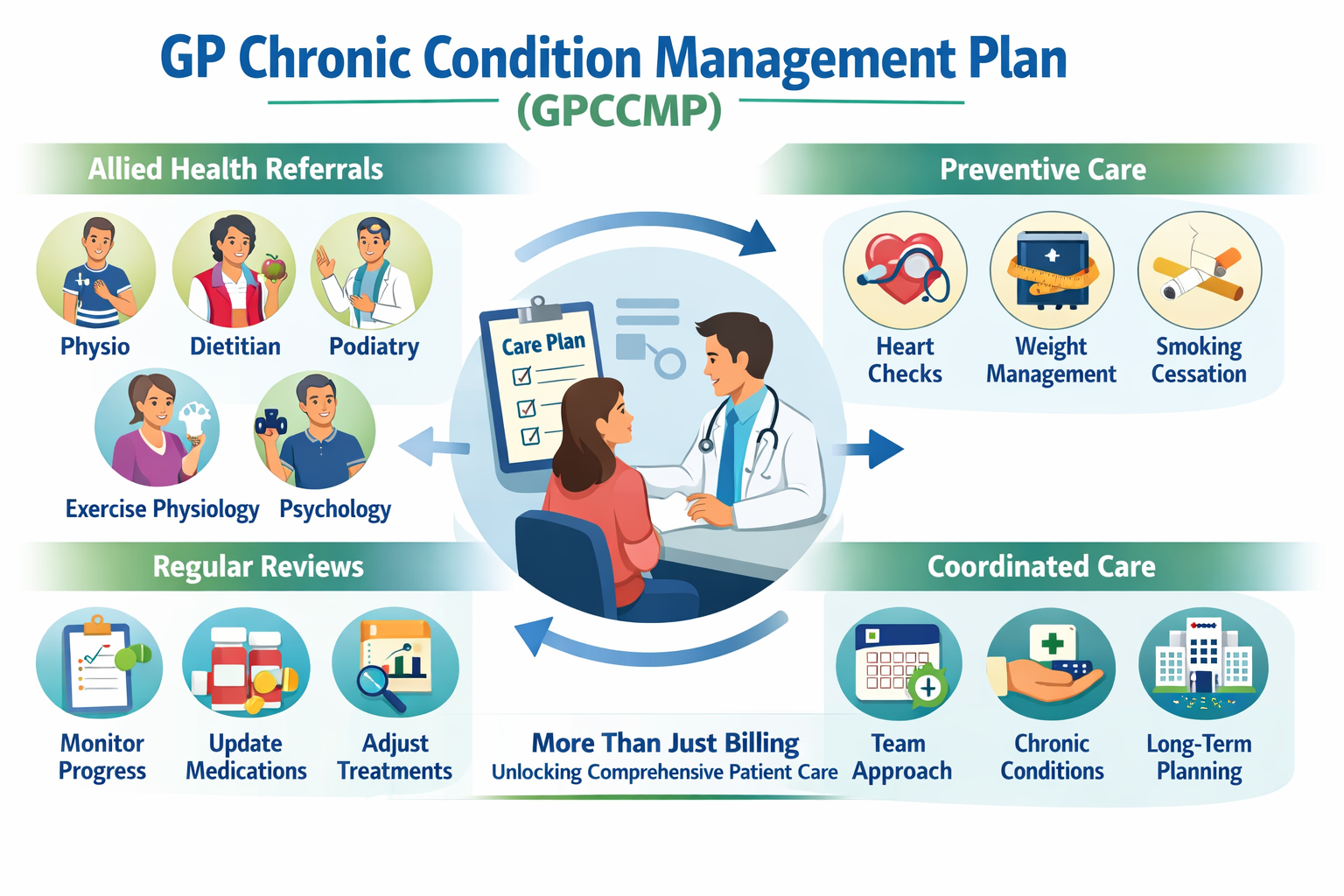
A practical guide for Australian GPs explaining GP Chronic Condition Management Plans (GPCCMP), patient eligibility, billing rules, allied health referrals and MBS item 965.

A practical guide for Australian GPs on ethically identifying opportunities to transition standard consultations into structured chronic care reviews using MBS Item 965 and 967. Improve outcomes through proactive care conversations.

A practical guide for Australian GPs on helping patients build sustainable dietary habits using SMART goals and Atomic Habits principles. Move beyond crash diets and create structured systems for long-term metabolic health.

A practical guide for Australian GPs on helping patients quit smoking using SMART goals and Atomic Habits principles. Move beyond motivation and build a structured behavioural system for sustainable smoking cessation.

A practical guide for Australian GPs on how to prescribe Ozempic and Wegovy, including assessment, PBS criteria, obesity work-up, lifestyle foundations, medication options, and deprescribing obesogenic drugs.

A practical guide for Australian GPs on managing excessive caffeine intake using SMART goals and Atomic Habits principles. Learn how to reduce dependency, improve sleep, and stabilise energy through structured behavioural systems.

A practical guide for Australian GPs on helping patients build a sustainable exercise habit using SMART goals and Atomic Habits principles. Move beyond motivation and create a structured behavioural system for long-term physical activity.

A practical guide for Australian GPs on identifying, assessing, and managing excessive alcohol use in general practice. Evidence-based frameworks, documentation strategy, and care planning tools to reduce patient harm.

A practical guide for Australian GPs on diagnosing and managing polymyalgia rheumatica (PMR), including key history features, red flags for giant cell arteritis, investigations, steroid treatment and tapering strategies.

A structured guide for Australian GPs on assessing hypermobility syndrome, including history taking, Beighton scoring, differential diagnoses, associated conditions, investigations, and management strategies.

A structured guide for Australian GPs on assessing female alopecia, including key history questions, physical examination tips, differential diagnoses, investigations, and evidence-based treatment options.

A structured guide for Australian GPs on assessing chronic low back pain, distinguishing mechanical from inflammatory causes, identifying red flags, and implementing evidence-based management strategies.

A practical guide for Australian GPs on assessing chronic diarrhoea, including key history, red flags, coeliac screening, and appropriate stool investigations such as faecal calprotectin, stool MCS, H. pylori antigen, occult blood, and faecal elastase.

Learn who qualifies for a chronic disease management plan (GPCCMP), eligibility criteria, Medicare requirements, and how GPs determine suitability for chronic disease care plans.

What are the key components of a senior care plan? A clear, practical guide for Australian GPs, practice owners, and families to turn consultations into structured, trackable actions.

A practical pillar guide for Australian GPs on understanding chronic disease management plans — eligibility, documentation, workflows, and AI tools to streamline care.

Learn how GPs manage multimorbidity using chronic disease management plans, coordinated care, and structured clinical workflows.

Chronic disease management is not a single plan but a lifelong project. Learn how to structure GPCCMP care using long-term thinking, measurable goals, and coordinated reviews.

When chronic disease goals are not achieved, the problem is rarely the goal itself. Learn why better systems, structured actions, and review processes matter more than rewriting targets.

Learn how to write clear, measurable SMART goals for GPCCMP (Item 965) and reviews (Item 967). Improve compliance, patient engagement, and chronic disease outcomes.

Use AI to turn 75+ and ATSI health assessments into structured clinical documentation without staying back after clinic.

An Australian GP’s guide to building a practical, Medicare-ready dementia care plan with workflows, tools, and clinical tips.

An Australian GP's guide to managing CKD Stage IV (eGFR 15–29): medication safety, complication screening, nephrology referral timing, GPCCMP documentation, and AI workflow tools.

Learn how to create a compliant chronic disease management plan, maximise Medicare billing, and save time using structured AI tools built for Australian GPs.

Learn what chronic diseases are, why they matter in Australia, common risk factors, and how structured care planning helps patients manage long-term conditions.

An Australian GP’s step-by-step guide to building a Parkinson’s disease care plan: MBS alignment, multidisciplinary team care, palliative planning, advance care, and practical AI tools.

A practical framework for Australian GPs to deliver comprehensive care across chronic disease, mental health, preventive care, screening, and lifestyle — structured as a system, not isolated consults.