GP Chronic Condition Management Plan (GPCCMP): Requirements, Eligibility and MBS Item 965 Explained
A practical guide for Australian GPs explaining GP Chronic Condition Management Plans (GPCCMP), patient eligibility, billing rules, allied health referrals and MBS item 965.
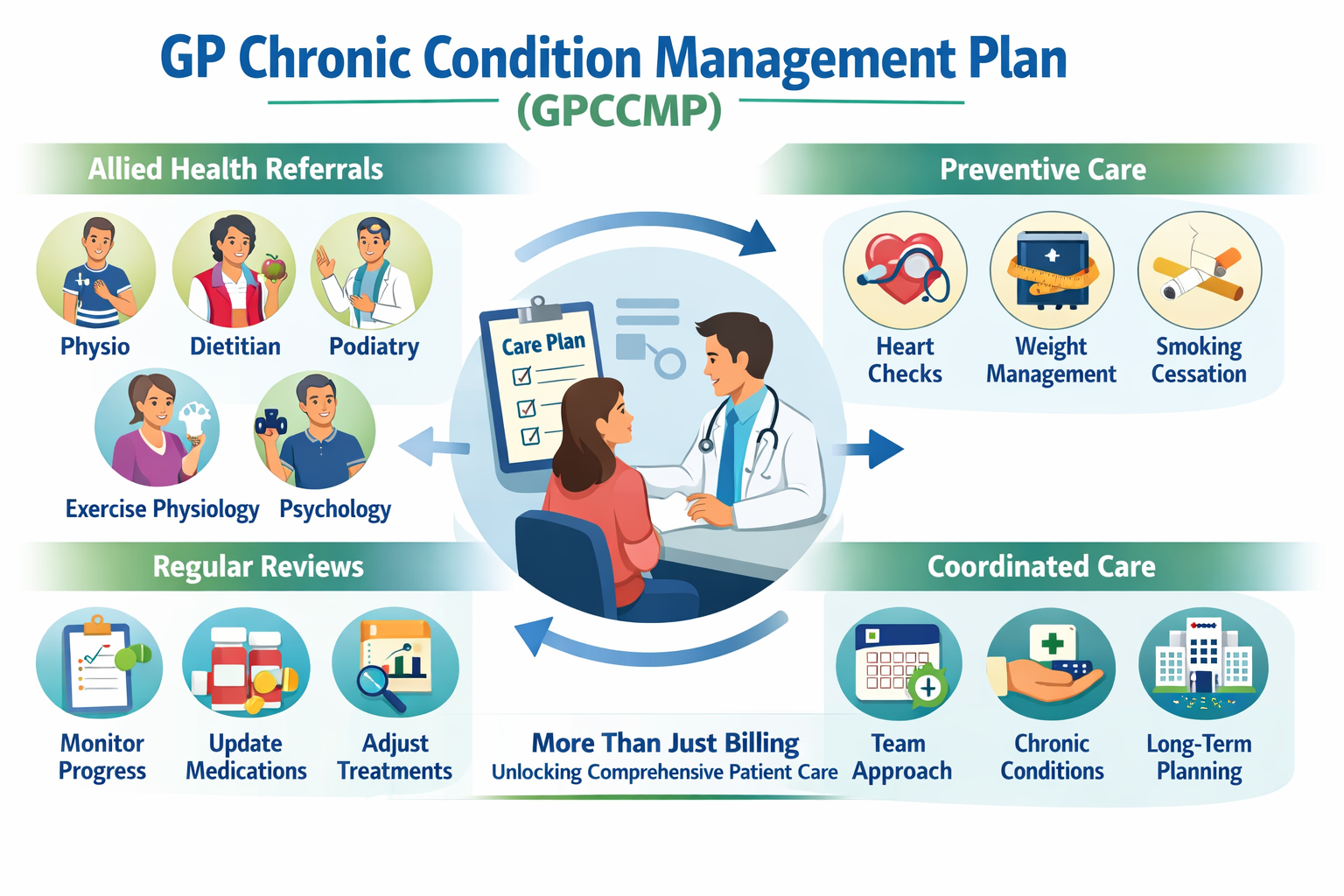
GP Chronic Condition Management Plan (GPCCMP): Requirements, Eligibility and MBS Item 965 Explained
A GP Chronic Condition Management Plan (GPCCMP) is a structured care plan used in Australian general practice to coordinate care for patients living with chronic or long-term medical conditions.
These plans help organise treatment, establish health goals, coordinate referrals, and monitor progress over time.
A GPCCMP also enables patients to access Medicare-supported allied health services, while helping GPs manage complex chronic disease in a structured and proactive way.
For official policy details see:
Table of Contents
- What Is a GP Chronic Condition Management Plan?
- Patient Eligibility
- Health Professional Eligibility
- Preparing the GP Chronic Condition Management Plan
- Referrals to Allied Health Professionals
- GPCCMP Unlocks More Than Just Billing
- Billing the GP Chronic Condition Management Plan
- Why GPCCMPs Matter in General Practice
- Using AI to Create GP Chronic Condition Management Plans
- Generate GP Chronic Condition Management Plans Faster
What Is a GP Chronic Condition Management Plan?
A GPCCMP documents a structured approach to long-term care.
It usually includes:
- the patient’s chronic medical conditions
- agreed treatment goals
- management actions for the GP and the patient
- referrals to allied health providers
- review and follow-up arrangements
The plan supports continuity of care, ensuring treatment strategies are clearly documented and reviewed regularly.
Chronic disease care works best when management is structured, monitored and coordinated.
GPCCMPs form part of the broader chronic disease management framework in Australian general practice.
Patient Eligibility
Chronic or Terminal Medical Condition
Patients may be eligible if they have at least one chronic or terminal condition expected to last six months or longer.
Examples include:
- diabetes
- cardiovascular disease
- chronic pain
- COPD or asthma
- arthritis
- mental health conditions
- obesity associated with chronic disease
There is no fixed list of eligible conditions.
Eligibility relies on clinical judgement.
Official eligibility criteria:
👉 Services Australia – Requirements for chronic condition management plan
Health Professional Eligibility
Usual Medical Practitioner
A GPCCMP is typically prepared by the patient’s usual medical practitioner.
This means the GP who provides most of the patient’s ongoing primary care.
Continuity improves:
- monitoring of chronic conditions
- medication management
- coordination of referrals
- follow-up planning
MyMedicare Patients
Patients registered under MyMedicare should normally receive chronic condition management services through their registered practice.
This supports:
- continuity of care
- better coordination
- improved long-term outcomes
More information:
👉 MyMedicare – Australian Government Department of Health
Preparing the GP Chronic Condition Management Plan
Preparing a GPCCMP typically involves:
- Assessing the patient’s chronic conditions
- Discussing management options with the patient
- Agreeing on realistic treatment goals
- Documenting management strategies
- Organising referrals
- Establishing review arrangements
The patient should be actively involved in developing the plan.
Shared decision-making improves adherence.
Core Elements of a GPCCMP
A typical plan includes:
- list of chronic conditions
- treatment goals
- medications and investigations
- lifestyle strategies
- allied health referrals
- patient responsibilities
- review schedule
If you want to improve goal-setting within care plans, see:
👉 How to Write SMART Goals in Chronic Disease Management
Referrals to Allied Health Professionals
Patients with a GPCCMP may access Medicare-subsidised allied health services.
Common services include:
- physiotherapy
- exercise physiology
- dietetics
- podiatry
- psychology
- diabetes education
Patients can usually access up to five allied health visits per calendar year.
The referral must be written by the GP and should align with the management plan goals.
Reference:
GPCCMP Unlocks More Than Just Billing
Many clinicians associate GPCCMPs primarily with Medicare billing items.
But the real value lies in the care pathway they enable.
A structured chronic condition plan creates opportunities for:
- multidisciplinary care
- proactive disease monitoring
- preventive interventions
- coordinated treatment strategies
Access to Multidisciplinary Care
A GPCCMP allows coordination with:
- physiotherapists
- exercise physiologists
- psychologists
- dietitians
- podiatrists
- diabetes educators
Multidisciplinary care is essential for managing complex chronic disease.
Structured Follow-Up Reviews
The plan also creates a framework for ongoing clinical reviews, allowing the GP to:
- monitor disease progression
- adjust medications
- review lifestyle interventions
- track treatment outcomes
Related article:
👉 From Standard Consult to Chronic Care Review Using MBS Item 965 & 967
Preventive Care Opportunities
Chronic disease reviews often identify opportunities for additional preventive care such as:
- cardiovascular risk assessment
- weight management
- smoking cessation
- mental health review
- vaccination updates
This shifts care from reactive medicine to preventive care.
Billing the GP Chronic Condition Management Plan
GPCCMP services are billed through the Medicare Benefits Schedule (MBS).
MBS Item 965 – GPCCMP Preparation
Item 965 applies when a GP prepares a GP Chronic Condition Management Plan.
Full item description:
MBS Item 967 – GPCCMP Review
Item 967 applies when reviewing an existing plan.
During the review the GP should:
- assess progress toward treatment goals
- update management strategies
- review allied health input
- adjust referrals if required
Quick Comparison
| Item | Purpose |
|---|---|
| 965 | Prepare GP Chronic Condition Management Plan |
| 967 | Review GPCCMP |
These items support ongoing longitudinal care.
Why GPCCMPs Matter in General Practice
Chronic disease accounts for a large proportion of general practice workload.
Structured care plans help:
- improve coordination of care
- reduce fragmented treatment
- support preventive strategies
- enable multidisciplinary care
They allow GPs to deliver long-term proactive healthcare instead of episodic treatment.
You may also find this article helpful:
👉 Managing Chronic Disease as a Lifetime Project
Using AI to Create GP Chronic Condition Management Plans
Preparing detailed care plans can be time-consuming.
AI tools can assist by:
- organising consultation notes
- generating structured care plans
- suggesting treatment goals
- coordinating referrals
- planning follow-up reviews
This allows clinicians to spend more time on clinical decision-making and patient interaction.
Generate GP Chronic Condition Management Plans Faster
AI tools such as Caredevo can generate structured GPCCMPs directly from consultation notes.
- Explore the GPCCMP Generator
- Access mental health tools via the MHCP Generator
Next step
Generate structured GP Chronic Condition Management Plans instantly with AI.